Thought Leadership

Market Report - Why we favour a good TACO - Highlights

The year did not begin as expected. Conflict, rising energy prices and a shift in inflation dynamics have changed the backdrop for markets, and with it, the balance of risks.

Download PDF Version

For several years, the global economy has defied repeated predictions of recession, despite higher interest rates and the introduction of tariffs. This resilience has supported equity markets over the past three years.

The recent surge in energy prices, driven by the Iran conflict, now presents a more meaningful test. While the impact may prove less severe than feared, current indications suggest it could prove more pronounced than previous shocks.

Unlike in 2022, there is less support from government spending and household balance sheets are not as strong. As a result, higher energy prices may weigh more heavily on growth, even if the inflationary impact is less extreme. A resolution to the conflict is also unlikely to deliver an immediate normalisation in prices or supply.

We identified rising US inflation as a key risk at the start of the year, and this is now beginning to materialise. Markets have responded accordingly, with pressure across equities, bonds and gold, while cash has held up relatively well.

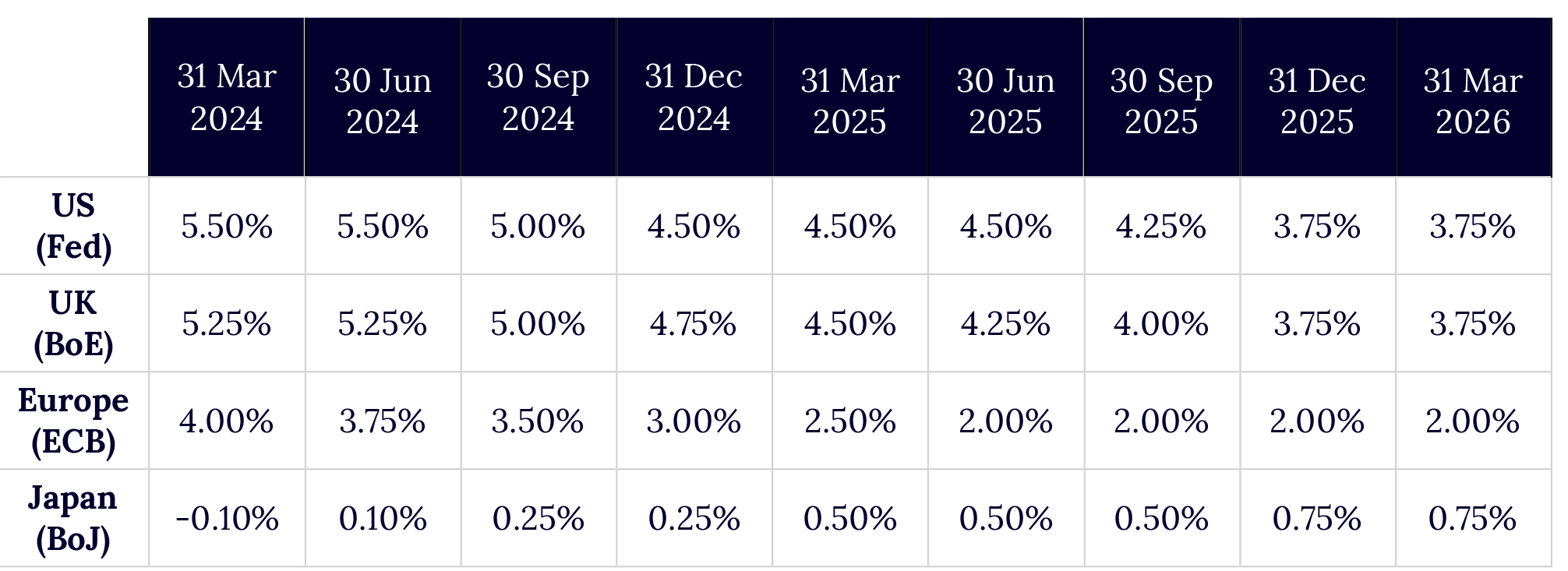
A more favourable outcome would involve a quicker resolution, easing energy prices and a gradual return to rate cuts. However, this may take time. For now, central banks remain in a holding pattern.

Given continued volatility and uncertainty, including the risk of further escalation, we have moved our outlook from neutral to cautious.

Reasons to be optimistic

  • Pre-war economic conditions were benign: Before the Iran war the global economy was growing in unison, if not particularly rapidly, and no major economy was in recession. Corporate profit growth was strong, especially in the US. Household balance sheets were solid and inflation was generally falling, allowing central banks to lower interest rates gradually. This positive backdrop has been an important support for the equity bull market over the last three years and may reassert itself after the Iran war ends.
  • President Trump has an interest in strong markets: It is likely that the impact of higher petrol prices and the decline in the stock market is putting pressure on President Trump to end the war soon. The acronym TACO (Trump Always Chickens Out) springs to mind. From the financial markets’ perspective TACO is good news, as it implies that the president does not pursue his most disruptive policies through to their logical conclusion. It underlines that Trump has an interest in the good performance of stock markets and the economy, since this is a central part of his appeal. Therefore when the war does end, he is likely to use every tool at hand to limit or offset the economic impact, if he is able to do so.
  • Possible long-term benefits of the war: While requiring a degree of optimism, a resolution between the US and Iran could ease longstanding tensions, strengthen stability in the region, and support energy markets. Such an outcome could deliver a broader “peace dividend” and improve relations over time.

Reasons to be cautious  

  • Oil price surge to lead to stagflation? At current levels, the oil price can be expected to push headline inflation up by 1-2% in the coming months. Apart from the possibility of the oil price rising further, the key question is whether higher energy prices will trigger second-round effects. Will inflation expectations increase and will workers begin to demand higher wage increases? This is what happened in 2021-22. There is less scope for this now as labour markets are weaker, but that may also mean that real wages fall, which would negatively affect consumer spending and growth. Hence concerns about 1970s-style stagflation have reemerged. This would complicate the task of central banks even more, intensifying the challenge for central banks and raising the possibility of rate increases.
  • Energy market dislocations will take some time to resolve: Even if the Iran war ends soon, it will not simply be a case of reopening the Strait of Hormuz and everything quickly returning to previous levels. Production of oil and gas has been reduced or stopped in many Gulf fields owing to the export blockage and it will take several months to return to pre-war production. Some facilities, such as Qatar’s gas plant, which supplies 20% of the world’s LNG, have been damaged by Iranian missile strikes and prolonged repairs will be needed to fully restore output. Shipping may also be hindered by damage to landing terminals. The Economist estimates that even if production restarted now, oil output would fall 3% this year and gas production would be 4% below demand. Hence oil and gas stocks will continue falling in the coming months, which could lead to further price increases and supply constraints until well into the northern winter.
  • Risk of economic weakness snowballing: The US economy was already slowing before the Iran war. This has been particularly evident in the labour market, where net jobs growth has been around zero over the last six months, a stark contrast from monthly jobs growth of up to 500,000 in 2021-22. There have also been signs of strain in some corners of the financial markets, particularly private credit and commercial real estate. Equity market valuations are historically high and vulnerable to a correction. Higher energy prices could curb enthusiasm for energy-intensive AI investment, which has accounted for a substantial portion of US economic growth over the past year. The energy price increase could therefore have a disproportionate impact on the economy and, in a more adverse scenario, lead to a broader downturn. Where the US goes the rest of the world will follow, particularly since many developed economies were already sluggish.

Tech & AI

Technology stocks fell sharply in the first quarter, with the Nasdaq down 7% and most of the Magnificent 7 underperforming, led by a near 25% decline in Microsoft. Unlike last year’s recovery after a weak start, a similar rebound in 2026 appears less certain. The sharpest falls were in software and services, where AI is expected to disrupt existing business models.

As a growth sector, technology is sensitive to rising inflation and interest rate expectations. However, the recent weakness also reflects growing scepticism around the scale and returns of AI-related capital expenditure. These investments are absorbing significant free cash flow and challenge the sector’s traditionally asset-light model, with long-term profitability still uncertain.
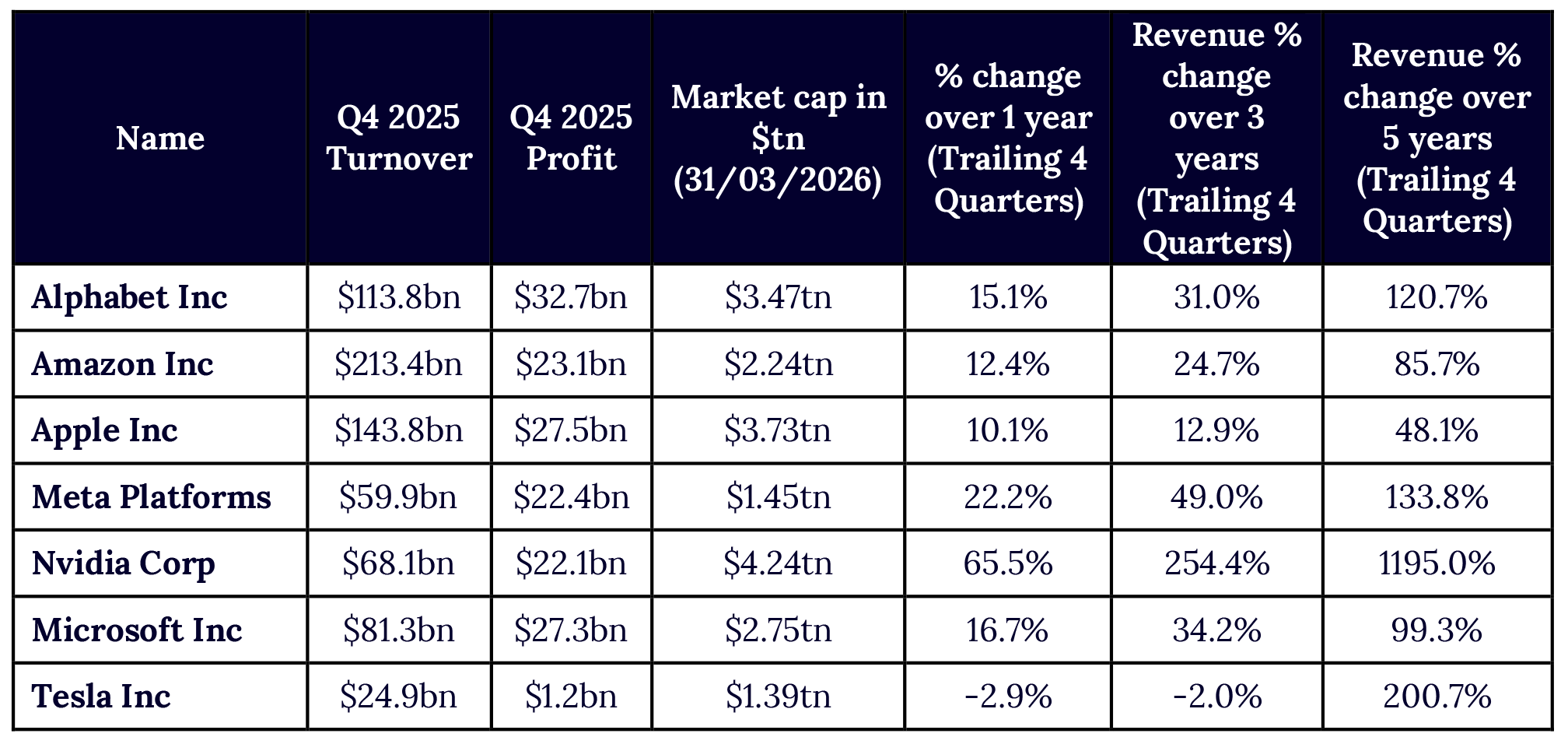
Q4 results for the Tech Titans

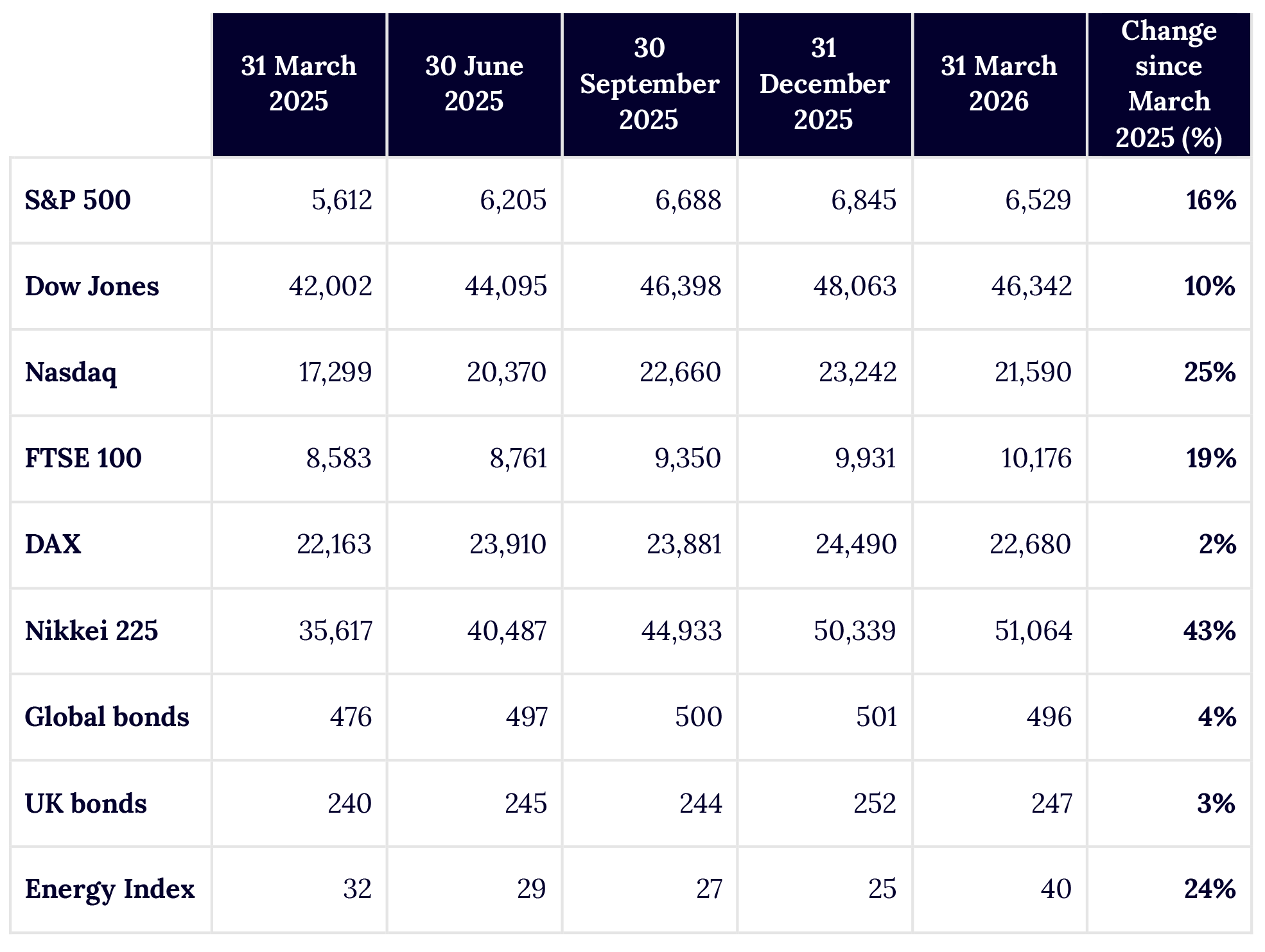
How have the markets performed?

NB: Figures rounded up to the nearest whole number.  We have also selected key indices as a representation of the markets rather than a substitute for the whole market as they are the most recognisable for our clients.

Interest rate

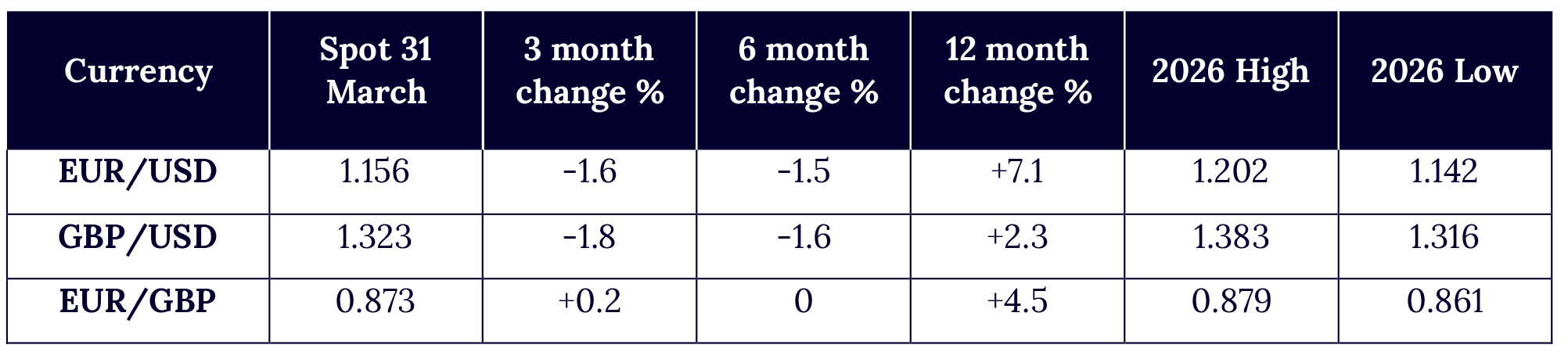
Currency themes and risks

EUR/USD

Recent trend: slightly down (stronger dollar)

Outlook: ambiguous

GBP/USD

Recent trend: slightly down (stronger dollar)

Outlook: ambiguous

EUR/GBP

Recent trend: neutral

Outlook: neutral to up (stronger euro)
Which asset classes should we consider?  

This quarter, we have moved from a “neutral” to a “cautious” outlook on the financial markets, as we believe the downside risks have increased. Of course, there is still upside potential in riskier asset classes such as equities and there are still possible positive scenarios for the future (particularly in the medium term), even though we believe these are less likely at present. As before, we recommend holding a moderate allocation in all mainstream asset classes. A moderate, diversified allocation would have weathered the market downturn since February reasonably well.  

Gold’s bull run was finally interrupted in the first quarter as it reached a record high of $5,300 before retreating. It was still up 8% in the first quarter as a whole, however, and 60% over the past year. It is hard to see gold exceeding this peak, so for now upside may be limited. Gold has become riskier and more volatile over the past year or two but still has a role to play as a hedge in portfolios.

As we noted last quarter, bonds are in some ways the linchpin asset class in 2026. Predictably, bonds were hit in the initial energy price spike, as inflation fears took hold and the market switched from anticipating rate cuts to building in forecasts of rate hikes. But if the inflation spike leads to an economic slowdown, bonds could eventually rally. If bonds continue to struggle, we could face a 2022 scenario where all asset classes expect cash to perform badly.

In practice, this reinforces the importance of maintaining alignment between portfolio structure and long-term objectives, rather than reacting to short-term developments.

Conclusion  

The outlook remains uncertain, particularly in relation to inflation and the potential impact of higher energy prices on growth. While the direction is not yet clear, this reinforces the need for a measured and disciplined approach.

In this environment, well-structured and diversified portfolios should be designed to absorb periods of volatility without requiring reactive change. Our focus remains on ensuring each portfolio continues to reflect long-term objectives, risk tolerance and liquidity needs, supported by ongoing dialogue and careful review.

Mark Estcourt, CEO

Our doors are open

request a meeting

Thank you! Your submission has been received!
Something went wrong. Please check if you've filled everything correctly